
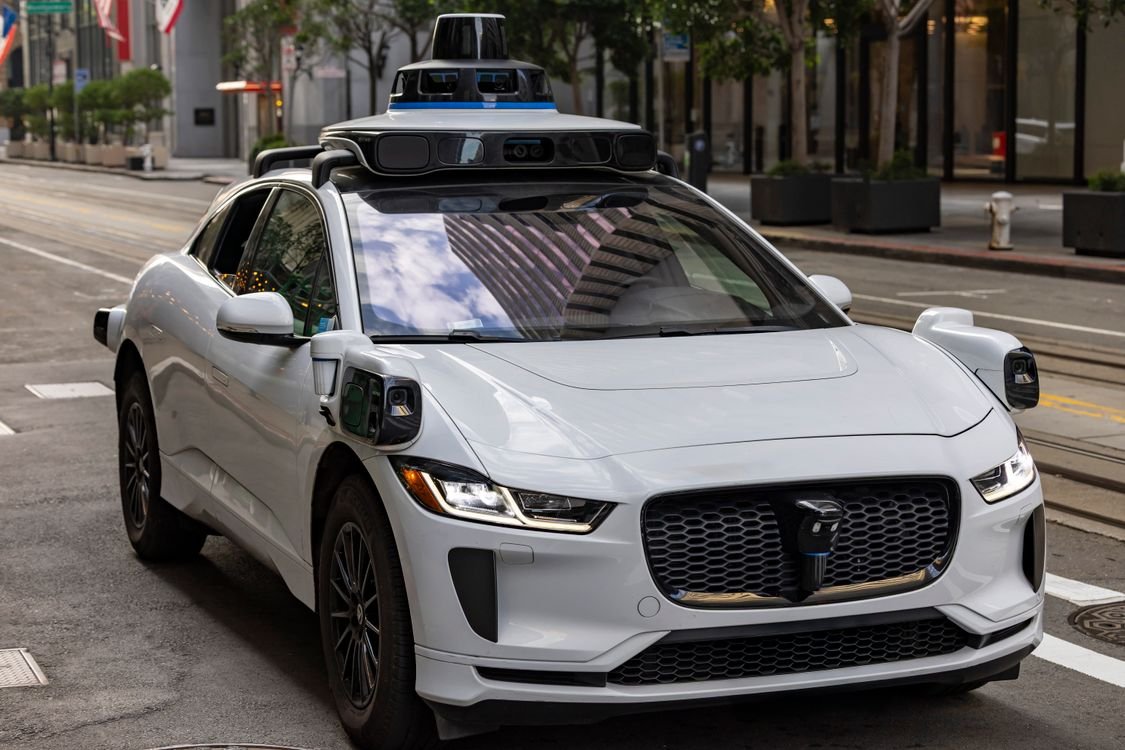
A car that drives itself used to be science fiction. Today, cars that can steer, brake, change lanes and park with little or no help from a human driver are already on the road in several countries, and the technology is improving every year. But how do self-driving cars work, and how do they know where to go, what to avoid and when to stop?
In this guide, we explain the sensors, artificial intelligence and safety systems behind self-driving cars, the different levels of automation, where the technology is today and what still needs to happen before driverless cars become common.
What Is a Self-Driving Car?
A self-driving car, also called an autonomous vehicle or a driverless car, is a vehicle that can sense its surroundings and drive itself, with little or no human input. It does not rely on a driver to watch the road, make decisions or control the steering, brakes and accelerator. Instead, it uses a combination of sensors, cameras, software and maps to do those jobs.
Not all self-driving cars are the same. Engineers use six levels of automation, from Level 0 to Level 5. At Level 0, the driver does everything. At Level 1 and 2, the car can help with steering or speed, but the driver must stay in control and watch the road — this is the driver assistance found in many new cars today. At Level 3, the car can drive itself in certain conditions, but the driver must be ready to take over. At Level 4, the car can drive itself in a defined area, such as a city centre, without a driver. At Level 5, the car can drive itself anywhere, in any conditions, with no steering wheel or pedals needed. Most cars on the road today are at Level 1 or 2, while a small number of Level 4 vehicles operate in limited areas.
The Sensors: How a Car Sees the Road
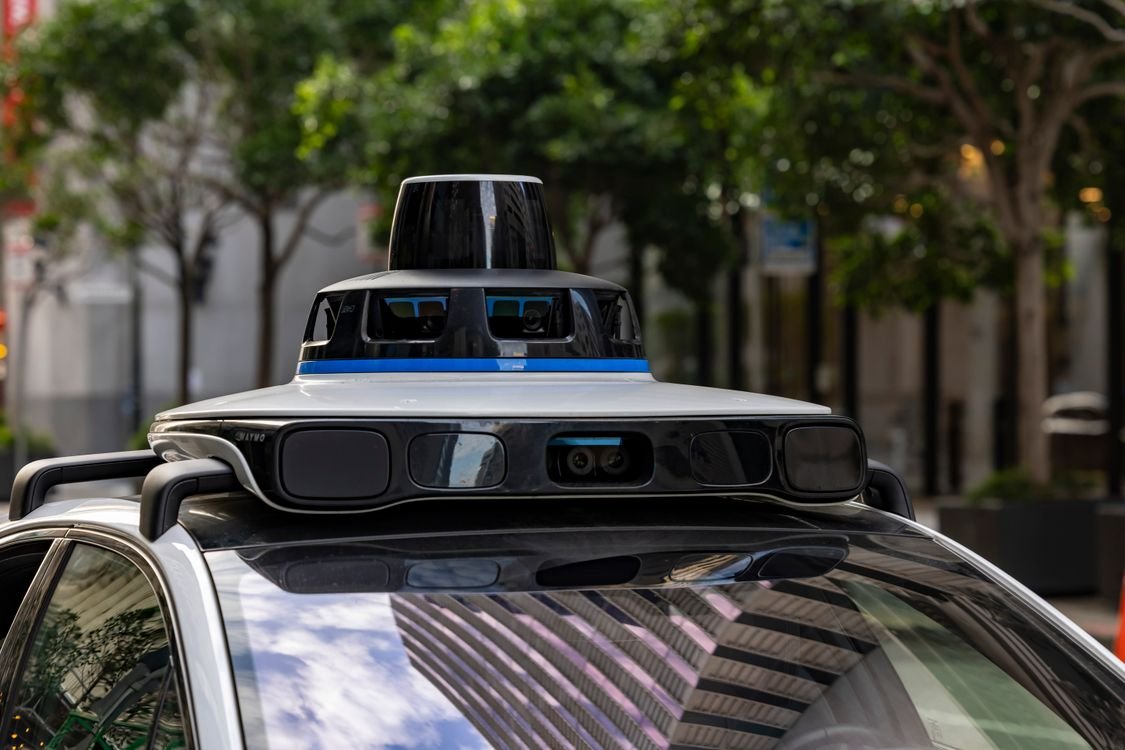
A self-driving car needs to see the world around it, and it does that with several types of sensor working together. Cameras are the most familiar: they read road signs, traffic lights, lane markings and the shape of other vehicles and pedestrians. Most self-driving cars have many cameras pointing in every direction, giving the car a 360-degree view.
Radar uses radio waves to detect objects and measure their speed and distance, even in rain, fog or darkness, when cameras struggle. Lidar is similar, but it uses laser light to build a detailed three-dimensional map of the surroundings, showing the exact position of cars, kerbs, trees and people. Ultrasonic sensors, like those used in parking sensors, detect objects very close to the car at low speed.
Each sensor has strengths and weaknesses. Cameras are good at reading signs but poor in bad weather. Radar works in bad weather but cannot read a sign. Lidar is precise but expensive. By combining them — a process called sensor fusion — the car gets a much more reliable picture than any single sensor could provide. Our guide to the Internet of Things explains how connected sensors are used in many other areas of life too.
The Brain: Artificial Intelligence and Decision-Making
Seeing the road is only the first step. The car must also understand what it sees and decide what to do. That is the job of its software, which uses artificial intelligence and machine learning trained on millions of miles of driving data.
First, the software identifies objects: that shape is a car, that one is a cyclist, that one is a pedestrian crossing the road. Then it predicts what those objects will do next: the pedestrian is likely to cross, the car ahead is slowing down, the cyclist is turning left. Then it plans a route and a speed that is safe, legal and comfortable, and it sends commands to the steering, brakes and accelerator.
The car also uses highly detailed maps, called HD maps, which show the exact position of lanes, kerbs, traffic lights and road signs, down to a few centimetres. These maps help the car know where it is and what to expect, even before its sensors see it. GPS and other positioning systems tell the car its location, and the sensors correct any small errors.
Safety: How Self-Driving Cars Try to Stay Safe
Safety is the biggest question about self-driving cars, and it is also the hardest to answer simply. Supporters point out that most road accidents are caused by human error — tiredness, distraction, speeding and drink-driving — and that a computer does not get tired or distracted. A self-driving car can watch in every direction at once, react in milliseconds and follow the rules exactly.
Critics point out that computers can also fail, and that they struggle with situations they have not seen before: a road covered in snow, a hand signal from a police officer, a child chasing a ball into the street or a badly damaged road sign. Self-driving systems are tested for millions of miles, in simulation and on real roads, but no amount of testing can cover every possible situation.
To reduce risk, self-driving cars have several layers of safety. They have redundant systems, so if one sensor or computer fails, another takes over. They are programmed to drive cautiously and to stop or pull over if they are unsure. And they are monitored, in many cases, by remote operators who can help if the car gets stuck. The safety record so far is promising in limited areas, but the technology is still being proved at a large scale.
Where Are Self-Driving Cars Today?
Today, most cars on the road offer driver assistance, not full self-driving. Features such as adaptive cruise control, lane keeping and automatic emergency braking are now common, and they make driving safer and less tiring. A few companies operate fully driverless taxis in limited areas of some US cities, where the cars carry passengers with no driver at all.
In other places, self-driving lorries are being tested on motorways, and driverless shuttle buses are running in airports, campuses and business parks. The technology is progressing, but it is doing so carefully, area by area, rather than all at once. Regulators are still working out the rules: who is responsible if a driverless car crashes, how the cars should be tested, and what data they can collect.
Cost is another barrier. The sensors and computers needed for full self-driving are still expensive, which is why the first driverless vehicles are taxis and delivery vehicles, where the cost can be shared across many trips, rather than private cars for most people.
The Challenges That Remain
Weather is one of the biggest challenges. Heavy rain, snow and fog can confuse cameras and lidar, and road markings can disappear under snow or roadworks. Unpredictable human behaviour is another: a pedestrian who changes their mind, a driver who breaks the rules or a cyclist who weaves through traffic. Self-driving cars are good at following rules, but people often do not.
There are also legal and ethical questions. If a crash is unavoidable, how should the car choose what to do? Who is liable — the owner, the manufacturer or the software company? How should the car handle privacy, when its cameras record everything around it? These questions do not have easy answers, and they will shape how quickly the technology is allowed to spread.
For more free tools that can help with your everyday tech tasks, visit the TechInsures free online tools page.
What Is Next for Self-Driving Cars?
The next few years will see self-driving technology expand slowly and carefully, area by area. Driverless taxis are likely to spread to more cities, lorries are likely to carry freight on more motorways, and driver assistance in private cars will become more capable, handling more of the driving on motorways and in traffic jams. Each step will be tested, regulated and monitored.
Further ahead, the technology could change how we travel. If cars can drive themselves, people who cannot drive — because of age, disability or eyesight — could travel independently. Cities could need fewer parking spaces, because shared driverless cars could be in use most of the time instead of sitting idle. And road deaths could fall, if the technology proves safer than human drivers.
None of that is guaranteed. The technology must prove itself safe, the law must catch up, and the public must trust it. But the direction is clear: cars are becoming more automated every year, and the question is no longer whether self-driving cars will arrive, but how quickly and in what form.
Frequently Asked Questions
How do self-driving cars work?
Self-driving cars use cameras, radar, lidar and ultrasonic sensors to see the road, artificial intelligence to understand what they see and decide what to do, and detailed maps and GPS to know where they are. The software plans a safe route and controls the steering, brakes and accelerator.
Are self-driving cars safe?
They are designed to be safe, with redundant systems, cautious driving and constant monitoring, and they do not get tired or distracted like human drivers. However, they can still struggle in bad weather and in situations they have not seen before, and their safety at a large scale is still being proved.
What level of self-driving do most cars have?
Most new cars today are at Level 1 or 2, which means they can help with steering, speed and braking, but the driver must stay in control and watch the road. Fully driverless cars at Level 4 operate only in limited areas, and no Level 5 car is on sale yet.
When will self-driving cars be common?
Driver assistance is already common, and driverless taxis are operating in a few cities. Widespread use of fully driverless private cars is still years away, because the technology, the law and public trust all need to develop further.
Conclusion
Self-driving cars work by combining sensors, artificial intelligence and detailed maps. Cameras, radar and lidar give the car a picture of the road, software understands that picture and decides what to do, and the car’s controls carry out the decision — all in a fraction of a second, and all without a human driver having to watch the road.
The technology is already here in part: driver assistance in new cars, driverless taxis in a few cities and driverless lorries on some motorways. It still faces real challenges — bad weather, unpredictable people, legal questions and the need to earn public trust — but it is improving every year. Understanding how it works helps you judge the claims, follow the progress and be ready for a future in which the car, not the driver, does the driving.